






Osseous (Bone) Surgery
Much like a turtleneck tightly encircling your neck, your bone and gum tissue should fit snugly around your teeth. When you have periodontal disease, supporting tissue and bone around the teeth are destroyed and pockets develop.
Over time these pockets become deeper and create more room for bacterial plaque to form and invade under the gum. This results in further bone and tissue loss around the teeth and can eventually lead to tooth loss. Deep periodontal pockets cannot be adequately cleaned with daily home care.
Osseous surgery is recommended when the bone supporting your teeth has been destroyed. It is generally prescribed in cases that have not responded to nonsurgical treatment such as scaling and root planing.
Osseous surgery is a traditional procedure that eliminates gum pockets by trimming away the infected gum tissue and diseased bone. The result is a healthier environment that promotes long-term maintenance and arrests the progression of periodontal disease.
The procedure can be performed on one section of the mouth or for all diseased areas of the mouth at the same time. However, spreading out the surgical treatment of various areas in your mouth over a longer period of time is not desirable.
This would be similar to only raking one-quarter of a leaf-covered yard in the fall. The wind would spread out the leaves over the section you have already raked and undo your hard work. Similarly, bacteria from untreated parts of your mouth can re-infect the treated areas.
Osseous surgery is performed to gain access to the diseased root and bone area, remove bacteria and infected gums, reduce pocketing, and set the stage for periodontal health. The gum and jawbone are reshaped so that the gum tissue can adhere strongly to your teeth, allowing both you and your dental professionals to more effectively and completely remove plaque.
During the procedure the pockets are reduced or eliminated by moving the gum closer to the bone. As a consequence, the tooth may appear longer and the spaces between the teeth may be larger.
Some temperature sensitivity is common after osseous surgery, but it typically lessens over time. During the healing period, you may find a sensitivity toothpaste to be helpful. For teeth in the front of the mouth, other treatment options may be considered depending on how much gum tissue is exposed (Smile Line).
As with any periodontal treatment, a lifelong commitment to regular professional care and maintenance is essential for a long-lasting successful outcome.
Benefits
A combination of reducing pocket depth and eliminating existing bacteria is essential to preventing damage caused by the progression of periodontal disease. Eliminating bacteria alone may not be sufficient to arrest the disease process.
Reduced pockets paired with effective daily oral hygiene and professional maintenance care increase your chances of keeping your natural teeth and decrease the likelihood of serious systemic health problems associated with periodontal disease.
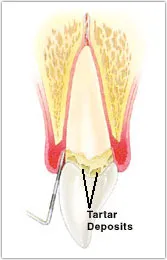
Mild Periodontitis
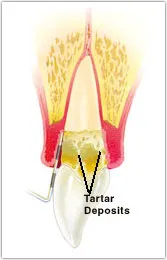
Moderate to Advanced Periodontitis